
Walk a Miami Lakes Street
A sound street search begins with land, not a guessed household. The Miami-Dade Property Appraiser Property Search ties a situs address, the physical address being assessed, to a folio and parcel outline. It also reports the named owner and a separate mailing address. Those facts create the stable keys for a Miami Lakes street directory search. They do not prove that the owner lives there or identify every occupant.
Work one parcel at a time and save the source date. On winding Miami Lakes roads, the next number may sit across a lake or around a bend. The map shows which lots actually touch. Then use the deed index, Town permit records, and other dated sources to test what the parcel card suggests.
- Enter the full address in Property Search. Save the folio, situs address, owner, mailing address, legal description, and current sales reference.
- Open the parcel map and click nearby polygons. Build the street list from mapped parcels instead of assuming number order.
- Use the folio or legal description in Official Records. Match deeds by land description, party role, and date.
- Search the same standardized address in Miami Lakes eTRAKiT for permits, inspections, and code matters.
- For historical occupants, ask the library for a metropolitan directory with a street or criss-cross section. Treat voter data only as dated registration evidence.
The useful chain is address to parcel, parcel to owner, owner to deed, and address to dated activity. A name that appears in two independent records is stronger than a name copied from one current card.
Miami Lakes Street Search Fields
The county property portal offers four distinct search routes, plus a suite qualifier. Address is the natural first choice for a street directory. Owner Name helps when only a person is known. Subdivision Name is valuable when an older deed uses planned-development geography rather than a modern postal label. Folio is the most precise bridge among the tax card, map, permit file, and deed research.
| Portal field | Input | Best street use | Limit |
|---|---|---|---|
| Address | Street number and name | Open a known parcel | A street-only query may not return every parcel |
| Suite | Unit qualifier | Narrow a multi-unit address | Not required for a basic parcel search |
| Owner Name | Name text | Compare possible holdings | Name variants can split results |
| Subdivision Name | Recorded subdivision | Bridge old legal geography | Requires the recorded name |
| Folio | Parcel identifier | Return to the exact tax parcel | Identifies land, not a household |
The portal states that its roll is edited continually and serves ad valorem assessment. Ad valorem means tax based on value. It is not a title opinion, and a recent transfer may take time to appear.
Map Miami Lakes Parcels
The property map and Miami-Dade GIS Open Data add the shape that text results lack. Zoom until parcel outlines are clear. Click each lot, copy its folio, and open its own card. Aerial imagery can explain a shared drive, water edge, or commercial footprint, but the current parcel card supplies the assessed name.
This method is vital in Miami Lakes. The town grew around lakes, cul-de-sacs, and curved streets rather than one strict grid. Define a block by cross streets and parcel boundaries. For a condominium or shopping center, expand every relevant folio instead of assigning one master-parcel owner to all units. The available official static material does not verify every GIS layer or export tool, so check the live viewer before relying on a special control.
Note: Aerial context shows physical form, while a parcel card and recorded deed supply the dated ownership evidence.
Decode Miami Lakes Address Records
A few terms prevent common street directory errors. They also help when a modern street label fails in an older county index.
- Parcel
- A mapped unit of land used by the Property Appraiser for assessment.
- Situs address
- The physical address of the assessed property, distinct from the owner's mailing address.
- Plat
- A recorded map that divides a subdivision into lots and blocks and may show roads or easements.
- Folio
- Miami-Dade's durable parcel identifier, useful across county and Town sources.
- Criss-cross directory
- A historical directory arranged by street and house number rather than only by surname.
Keep each term tied to its source date. A mailing address may belong to a trust contact or management office. A homestead exemption supports owner occupancy for a tax year, but it still does not list the whole household.
Miami Lakes Records by Address
No single agency keeps a complete Miami Lakes street directory. County parcel and deed records cover land. Town systems cover work and code activity. Elections holds registration data under separate access rules, while library directories can preserve listed historical occupants.
| Address source | Custodian | Street evidence | How to reach it |
|---|---|---|---|
| Parcel and tax roll | Miami-Dade Property Appraiser | Owner, situs, mailing address, folio, legal description | Free search and map |
| Deeds, liens, and plats | Miami-Dade Clerk Recorder | Parties, dates, instrument, land description | Most from 1974 online; older Records Library |
| Permits and code cases | Town of Miami Lakes | Projects, applicants, contractors, inspections, case status | eTRAKiT, Town request, counter, phone, or email |
| Voter registration | Miami-Dade Elections | Nonexempt registration fields as of a stated date | Individual verification or tailored records request |
| Historical directories | Miami-Dade Public Library System | Listed occupant or telephone by historical address | Main Library, catalog, and e-reference |
Join these sources by folio, legal description, exact address, and date. Do not join on surname alone. The voter lookup verifies a known person's record and is not a public browseable block list. A request for nonexempt voter fields should state the geography, as-of date, format, and desired fields; protected identifiers, signatures, and protected addresses remain withheld.
Follow Miami Lakes Deeds
Once the parcel card supplies a current name, folio, legal description, or sales reference, open the Miami-Dade Official Records search. The index includes deeds, mortgages, liens, plats, judgments, domicile declarations, releases, and other instruments. A grantor transfers an interest; a grantee receives it. The result line may show their roles, the Clerk's File Number, recording date, document type, book and page, legal description, and an image link.
Save the whole index line. Execution and recording dates can differ, and not every instrument is a sale. To follow land across a spelling change or postal label, search by subdivision, lot, block, and plat reference. That legal description is often more reliable than a person's name.
The web index covers most records from 1974 forward. For an older gap, use the Records Library public computers in person, call 305-275-1155, or mail a request to the Office of County Recorder, 20 NW 1st Avenue, Suite 5.246, Miami, FL 33128. State the full name, document type, and property address or legal description. Staff searches cost $2 per name per year; ordinary copies cost $1 per page, with $2 added for certification.
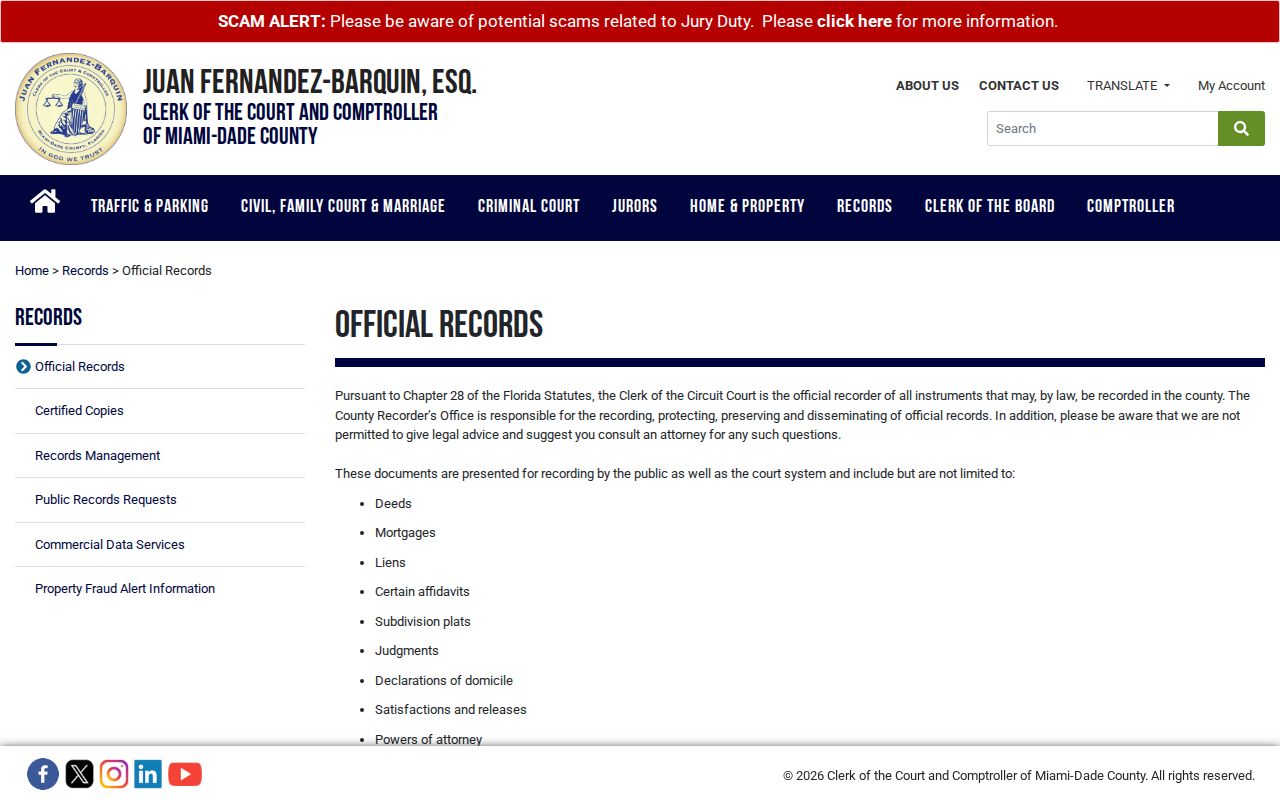
Use the manifest capture of the Official Records entry point to recognize the correct county source.
Miami Lakes Permits by Street
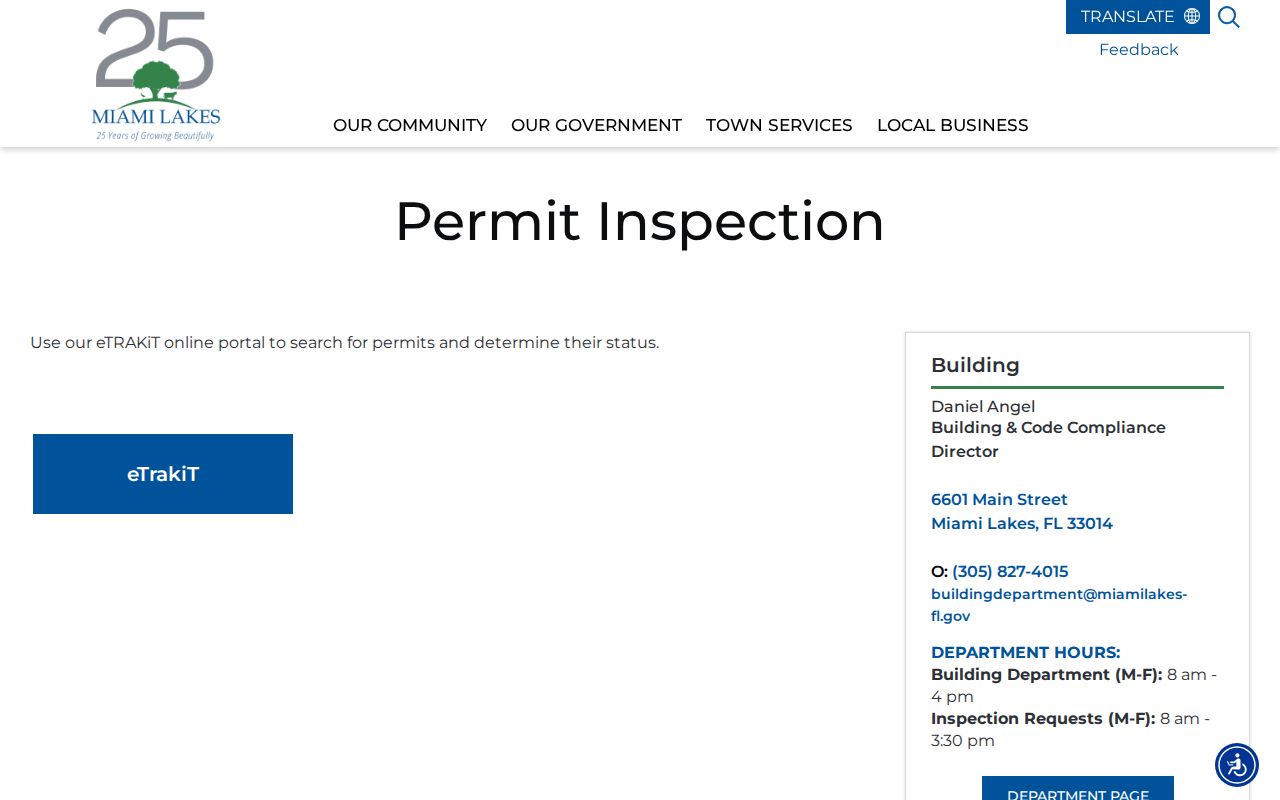
The Town's Building, Zoning and Code Compliance page leads to eTRAKiT. Public search fields include Permit Number, Property Address, Folio Search, Permit Type, and Contractor Name. Results can connect an address with an applicant, contractor, project, status, plan review, or inspection history. The public research did not establish the first year in the system, so an empty result is not proof that no older file exists.
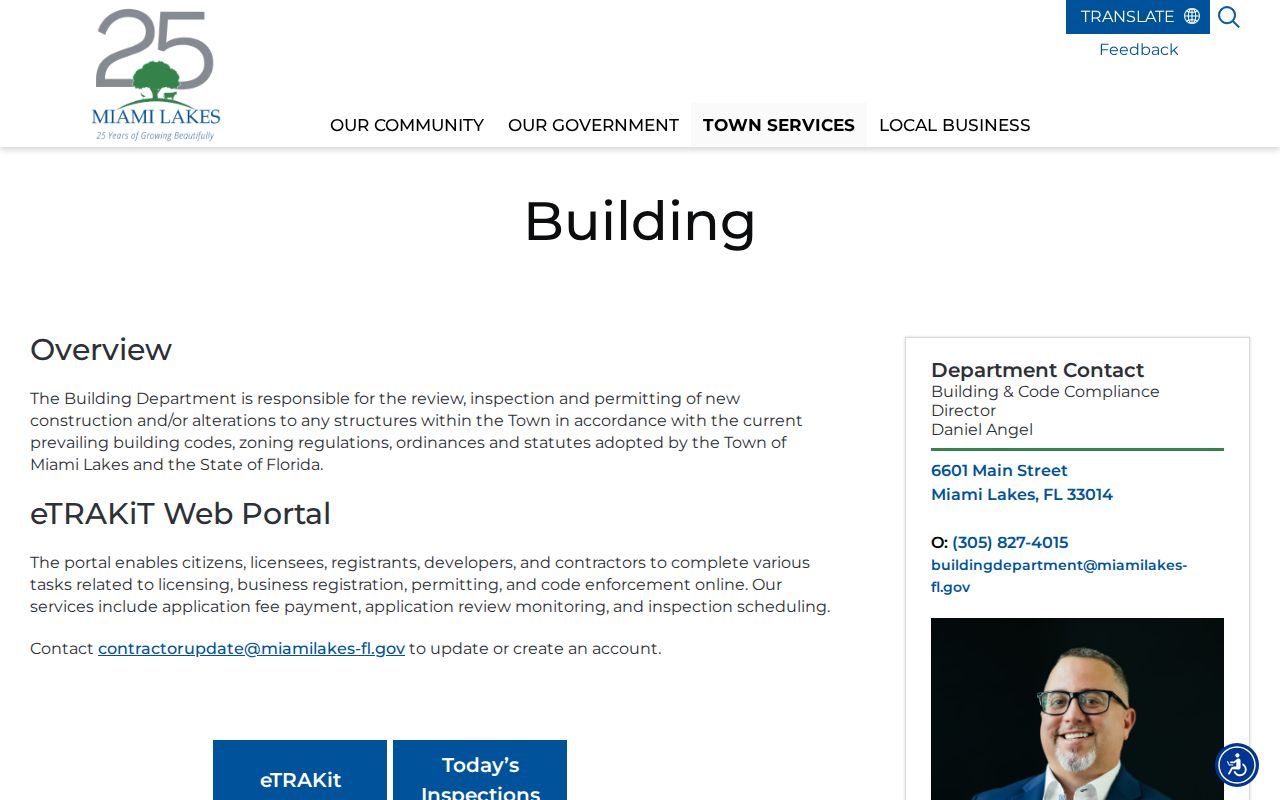
Missing plans or older documents can be requested from the Building Department. The counter at Town Hall is open Monday through Friday, 8 a.m. to 4 p.m.; phone 305-827-4015 and email buildingdepartment@miamilakes-fl.gov. A written request should give the address, folio, permit number if known, document type, dates, preferred electronic format, and a request for a cost estimate.
The permit and inspection portal is shown in the captured source below.
The Town Building Department source also identifies the office that handles missing plans and permit documents.
Street-Level Miami Lakes Code Files
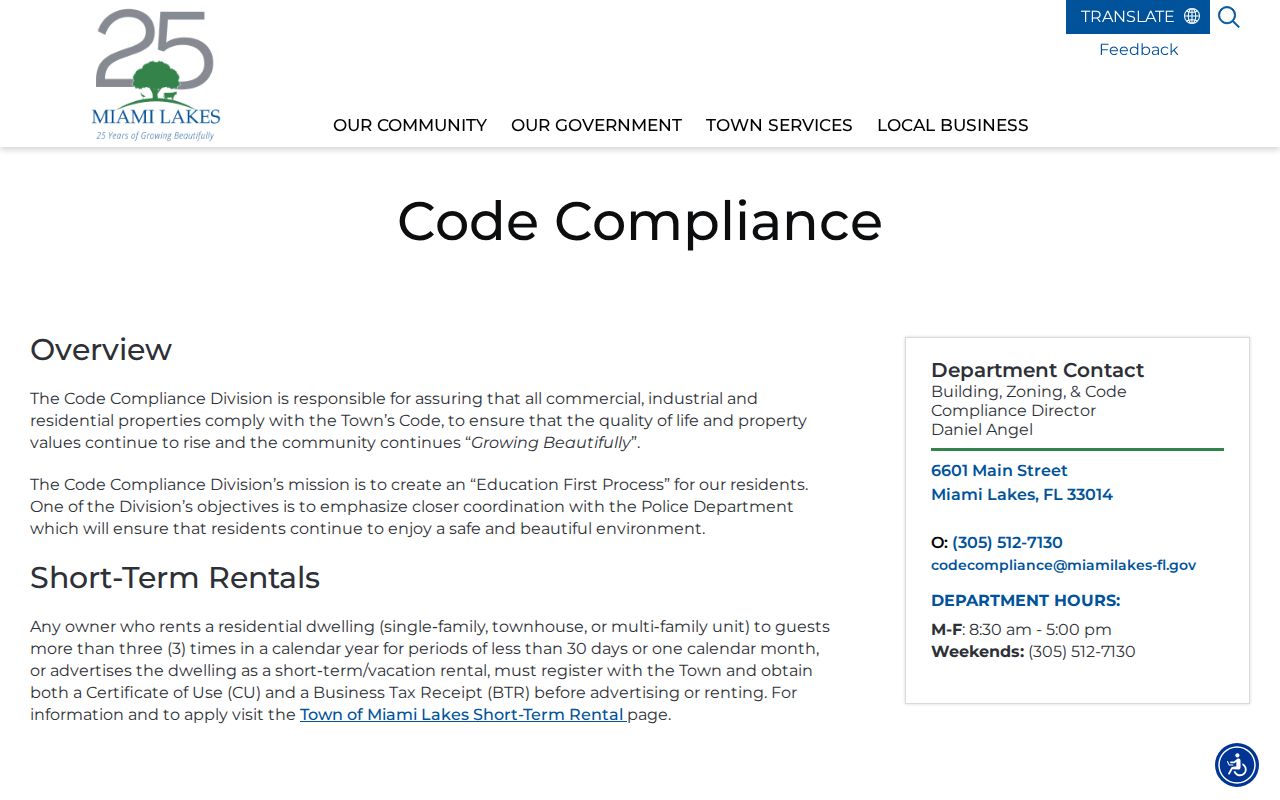
The Miami Lakes Code Compliance page provides case access and contact routes. Code records may report the address, alleged condition, inspection dates, status, orders, or a lien. Record the status and date without treating an open allegation as a proven or lasting fact. A recorded code lien or release may also appear in county Official Records.
Since July 1, 2021, a code complaint generally must include the complainant's name and address unless an apparent imminent threat fits the stated exception. For a missing case, contact Code Compliance at 305-512-7130 or codecompliance@miamilakes-fl.gov, use Miami Lakes Connect, or make a narrow Town records request.
The captured Town code search source shows the local access point.
Older Miami Lakes Street Labels
Miami Lakes became an incorporated town in 2000, while planned development began decades earlier. Older property and directory evidence may therefore sit under Dade County, Miami-Dade County, Miami or Hialeah postal geography, or a subdivision name. The land did not move when the government label changed.
Use the folio and lot, block, and plat description to bridge that change. No reviewed official source documents a townwide street-renumbering year, so do not create one to explain a failed search. Try the recorded subdivision and county label, then ask the custodian or a librarian to check the appropriate era.
For a historical listed occupant, the Miami Lakes city directory collections explain how to locate metropolitan and criss-cross editions without turning this modern street search into a shelf inventory.
Limits of Miami Lakes Street Records
A property owner is not a roster of everyone who lives at an address. Renters, relatives, minors, and unlisted household members may not appear in any public address index. The same is true of a criss-cross directory: it reports only the people or telephone entries selected for that edition. Voter data is tied to registration administration and a date, not to where a person slept last night.
Florida protects Social Security numbers, driver-license or state ID numbers, voter signatures, and the registration-source location. Certain people and Address Confidentiality Program participants can also have protected addresses. Sealed court files and other exempt records do not become open because a street search is broad.
Lawful use. Use Miami Lakes address records only for lawful personal research, such as property history or family history. Never use a record to stalk, harass, intimidate, or harm anyone.
When an online search fails, use the office that owns the record. The Town Clerk accepts portal, email, phone, fax, mail, and counter requests for municipal files. The Records Library handles older recorder gaps. Elections handles nonexempt voter products, and the library supplies historical context. A blank portal screen is only a failed search, not proof that the event or person did not exist.