
Miami Lakes Directory Collection Map
The Miami-Dade Public Library System Genealogy Collection is the main starting point. Its official description reports city directories and telephone indexes among more than 27,000 books and 35,000 microforms. The public page does not publish a volume-by-volume list of Greater Miami or Polk editions. A librarian or shelf-catalog check is required before claiming any exact Miami Lakes city directory year or continuous run.
| Collection | Years | Where Held | Access |
|---|---|---|---|
| City directories and telephone indexes | Selected major-city material; exact local run unverified | MDPLS Main Library Genealogy Collection | Catalog, in-library shelf or microform, librarian help |
| Florida state censuses | 1885, 1935, 1945 | MDPLS microform and digital resources | Name and place research |
| Federal census | 1790 through 1950 open | National Archives and partners | Free 1950 name and location search |
| Alien Arrivals by Airplane at Miami | 1930 through 1942 | MDPLS Genealogy Collection | Arrival names and travel facts |
| Miami-Dade Obituary Index | Varies by newspaper and indexed date | MDPLS online | Name and date lead, then newspaper |
| Florida Memory collections | Territorial, state, and local holdings | State Archives online and catalog | Digital item or archive request |
The table separates verified coverage from a hoped-for local volume. Miami Lakes development took shape mainly after 1960 and the Town incorporated in 2000. A nineteenth-century book will not have a Miami Lakes heading, and a later address may be filed in a metropolitan Miami, Hialeah, Dade County, or subdivision section.
Miami-Dade's Genealogy Room
The Main Library Genealogy Collection is more than a shelf of city directories. Its holdings include surname files, family histories, church and immigration material, military sources, NARA microforms, passenger lists, Florida World War I draft registrations, and historical census material. That range matters when a printed entry stops.
Ask a genealogy reference librarian to search the catalog under Miami, Hialeah, Dade County, telephone directory, Polk, city directory, reverse directory, criss-cross, and the target year. For remote help, send a narrow question with the person's name or address, approximate year, likely edition, and the citation needed. An open-ended family tree request is less likely to produce a precise shelf answer.
The manifest image comes from the MDPLS genealogy collection.
Note: Record the catalog call number and edition title before leaving the library, since broad metropolitan volumes can look alike.
Why Old Miami Lakes Names Shift
Dade County was created in 1836 and renamed Miami-Dade County in 1997. Miami Lakes was a postwar planned community and did not incorporate until 2000. That sequence explains why older city directory research rarely begins with the Town's current name. Development-era residents may appear under county, postal, subdivision, or metropolitan headings.
Start with the address and subdivision from the Property Appraiser. Search legal descriptions when a postal label changes. A volume's title page and scope note should show whether suburban listings are included. No official source reviewed supplies a complete local publisher and year run, so the absence of a Miami Lakes heading is not proof that the family was absent.
Read Miami Lakes Directory Entries
Copy the printed line exactly before translating it. Polk-style formats can compress a surname, initials, spouse, widow notation, occupation, employer, residence, business address, telephone, and owner or renter mark into one entry. Publishers and years differ, so use the abbreviation page from the same edition.
| Name | Surname, given name or initials, sometimes a spouse in parentheses |
|---|---|
| Life clue | Widow notation or another status mark exactly as printed |
| Work line | Occupation, employer abbreviation, or business address |
| Residence | House number, street, apartment, or cross-reference |
| Tenure mark | An owner or renter symbol only when that edition defines one |
| Telephone | A listed number where the volume includes telephone data |
- Criss-cross directory
- A section arranged by street and house number, reversing the usual name-first search.
- Householder index
- A list that groups the named person associated with a household entry.
- Abbreviation key
- The edition's own guide to shortened words and symbols; capture it before decoding entries.
Preserve initials and cross-references. Do not silently expand a name or assume that a spouse notation lists every adult. A directory is a published snapshot, not a government-certified household record.
Reverse a Miami Lakes Address
When only an address is known, look for the street section or criss-cross portion of the closest edition. Find the street, then the house number. Record each listed unit, occupant, telephone, and cross-reference. Check whether apartment numbers are interfiled or separated.
This historical address method differs from the modern parcel workflow. A printed directory may name a listed occupant, while the tax card names an assessed owner. The two can disagree without either source being defective. For current address-keyed research, use the Miami Lakes street directory workflow and county parcel tools.
Miami Lakes Census Bridges
Florida's 1935 and 1945 state censuses offer mid-decade household snapshots that many states lack. They predate most Miami Lakes development but can trace a family before a later move into the community. The National Archives 1950 Census is the latest open federal person-level schedule under the 72-year rule.
A 1950 result may report name, age, birthplace, address, marital status, and other household facts. The 1960 federal census will not open until 2032. For Miami Lakes development-era gaps after 1950, city directories, deeds, and permits carry more of the trail. Pair the sources; do not force one to answer every question.
Beyond Miami Lakes City Directories
The MDPLS Miami-Dade Obituary Index can turn a name into a newspaper date, which may then point toward relatives or an estate. Probate files remain with the Miami-Dade Clerk. Passenger lists, the unusual Alien Arrivals by Airplane at Miami collection for 1930 through 1942, draft registrations, church sources, and surname files can test a connection that a directory abbreviation leaves unclear.
Florida Memory and university or museum special collections may add maps, photographs, school publications, manuscripts, and oral histories. Confirm catalog terms, appointment rules, and reproduction fees with each repository. These sources provide context and leads; the original deed, probate filing, or certificate remains the controlling record for its event.
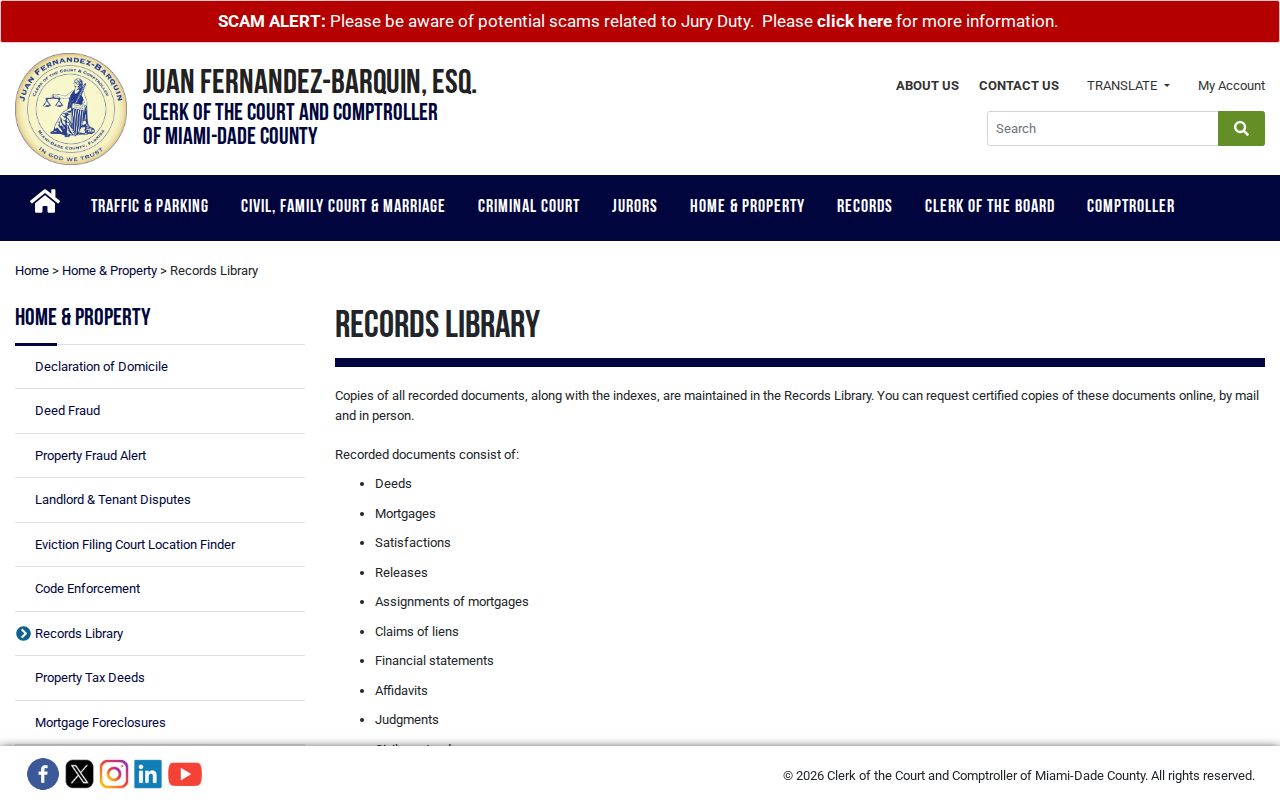
A captured Miami-Dade Records Library page shows the county fallback for recorded material.
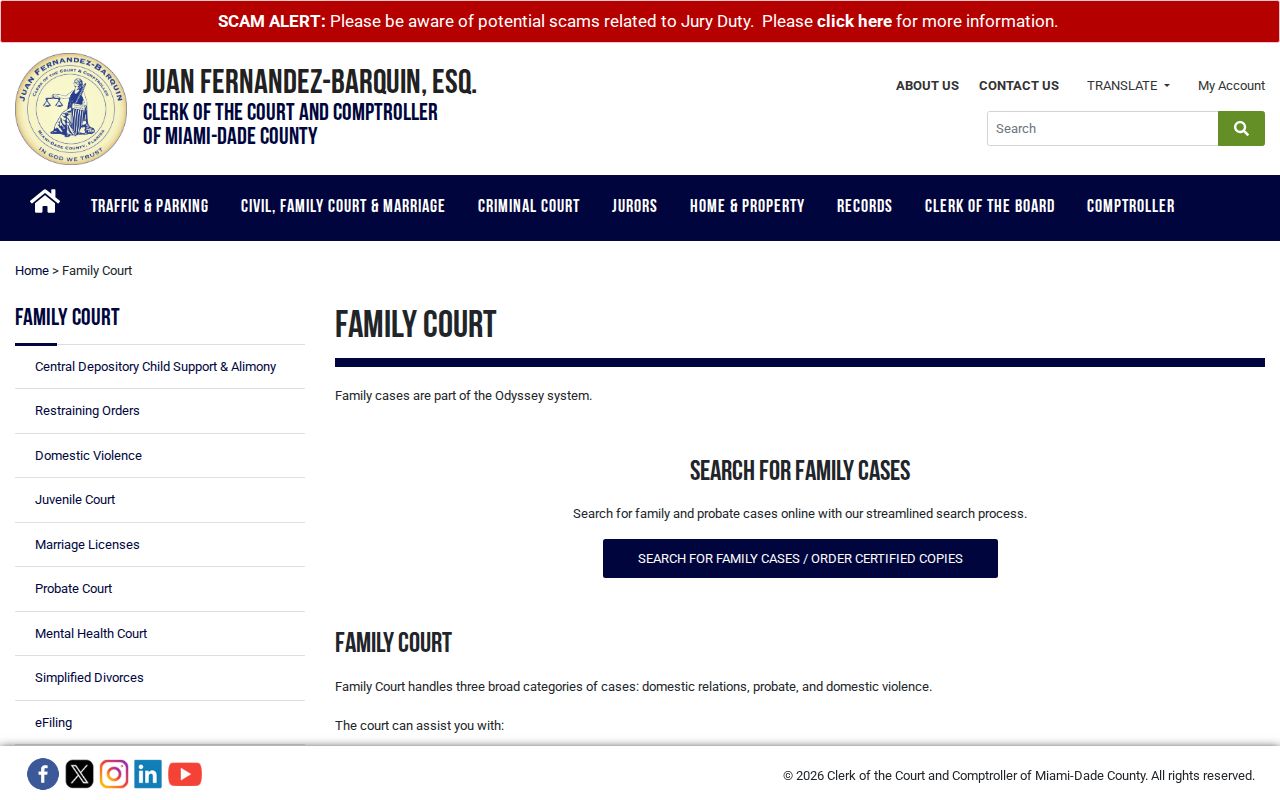
When an entry ends with a death or estate clue, the Miami-Dade family and probate records route can locate a public docket.
Check Miami Lakes Property Clues
A directory address can be tested against the county parcel card and deed index. The property card distinguishes situs from mailing address and supplies the folio and legal description. Those keys help when a street label changes or a household name never appears as the owner. A directory finding should not be treated as title evidence.
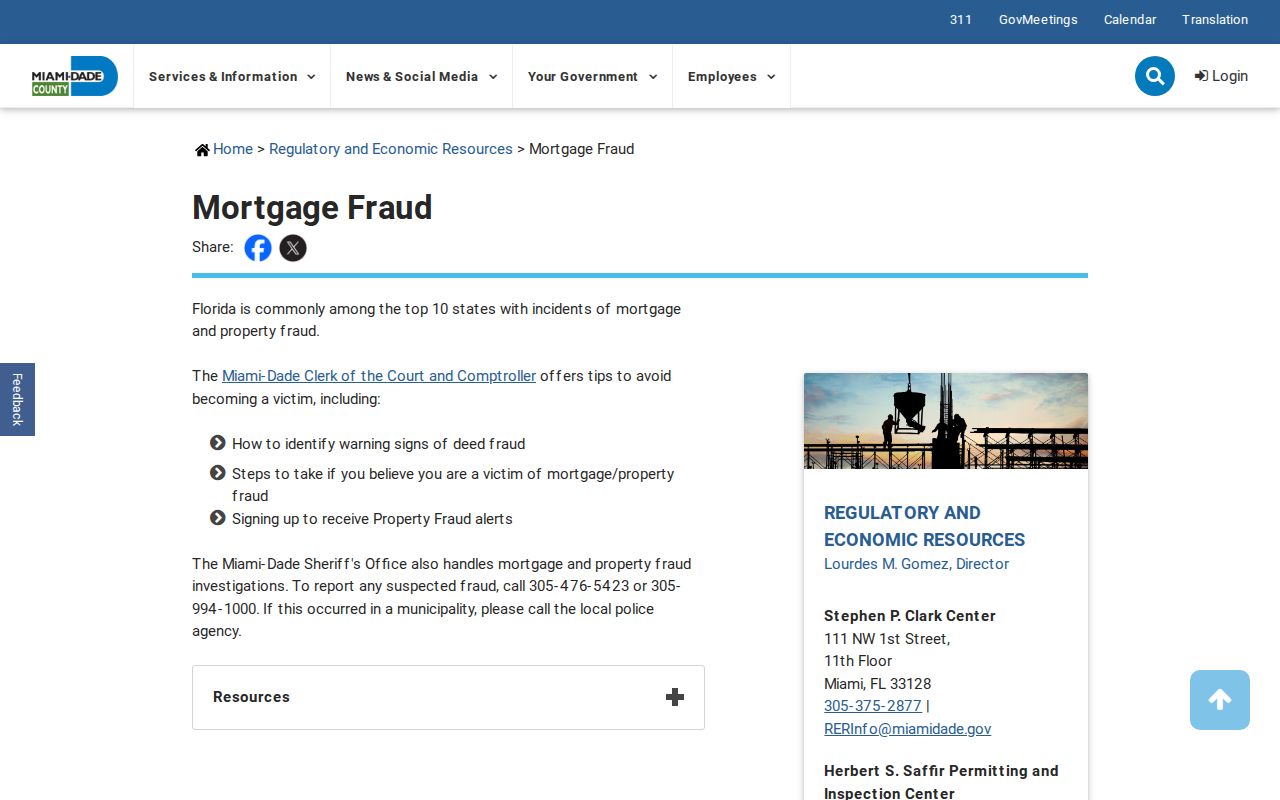
Property records also deserve fraud awareness. The county's mortgage and property-fraud information explains official reporting contacts. It is a source for checking suspicious recorded activity, not a substitute for reading the actual instrument.
Trace Miami Lakes Family History
A family-history trail should move through adjacent editions, not leap from one city directory hit to a firm move date. Publication lag can place an entry a year behind real life. A first appearance may follow construction or a delayed listing. A last appearance may reflect a move, death, nonresponse, changed name, or a publisher's scope.
- Identify the historical jurisdiction and likely metropolitan or subdivision heading.
- Record the publisher, title, year, scope, volume, and title-page date.
- Copy the alphabetical entry verbatim, then check the same address in the street section.
- Read the prior and next available editions, preserving spelling and address changes.
- Pair the line with a state or federal census, then use a deed, permit, obituary, or probate file to explain the change.
- Cite the edition, section, page, entry, repository, call number, and access date.
Keep contradictions. An owner may live elsewhere, a listed occupant may not own the parcel, and a census household may contain people omitted from the directory. Those differences reveal how each record was made.
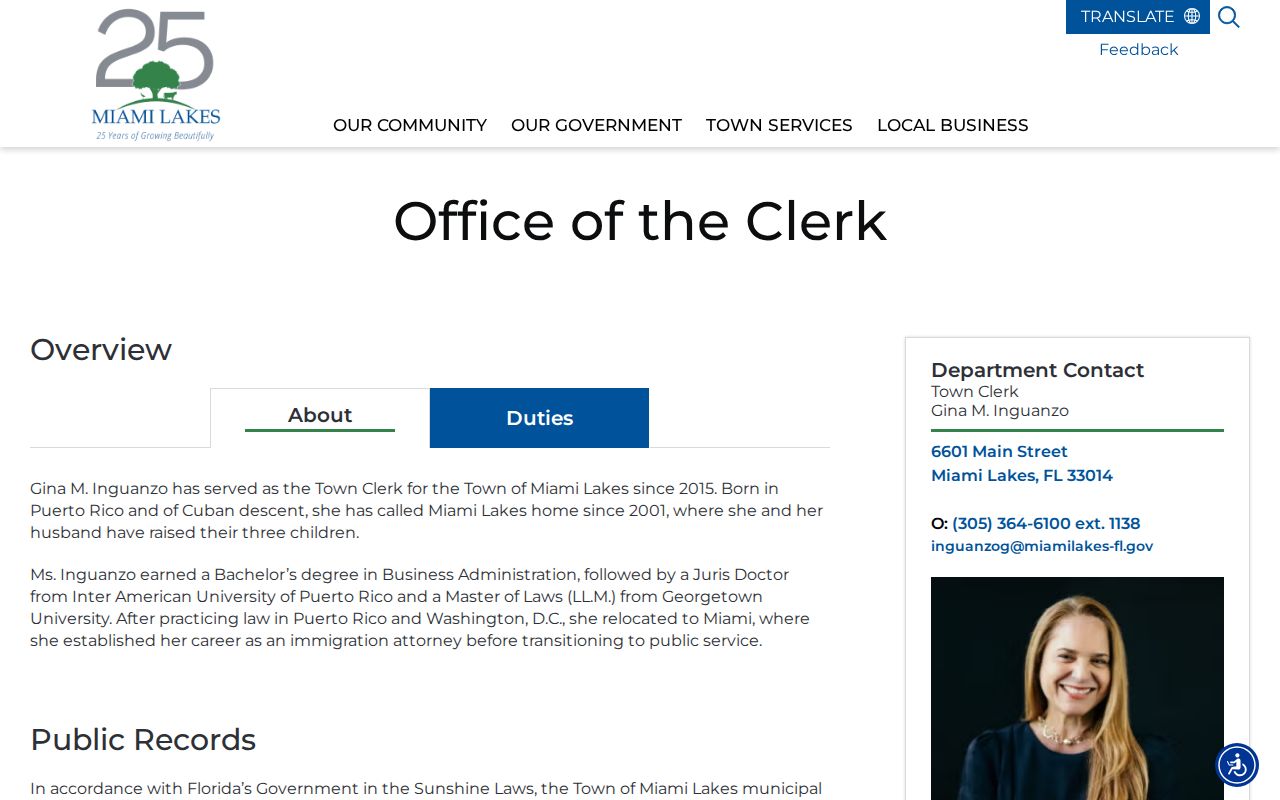
For an unavailable online item, ask MDPLS e-reference a narrow question or visit Main Library. If the answer depends on a court or recorded instrument, use the Clerk's correct case-copy or Records Library process rather than a generic request. The Town Clerk handles municipal records through its portal, email, phone, fax, mail, or counter, but it does not keep the county's historical deed books.