
Finding Miami Lakes Residents
Choose a starting record from the detail already known. An address belongs first in the Miami-Dade County Property Appraiser search. A name can be tested against owner names, deeds, public court indexes, business filings, and license records. For an older address, preserve its folio and legal description before searching directory volumes. Those identifiers survive changes in postal labels and town boundaries better than a modern city name.
Keep the role attached to each name. A grantee received an interest in a recorded instrument, an officer signed a business filing, and a permit applicant dealt with a project. None of those labels automatically means current resident. The strongest match joins two independent facts, such as the same middle initial and parcel, or a deed role and matching mailing address.
- Search the county parcel roll by the full address or owner name.
- Save the folio, situs address, mailing address, legal description, tax year, and sale reference.
- Use the deed reference or party name in the Clerk's Official Records index.
- Check the proper court, voter, business, license, or vital-record channel when it fits the question.
- Ask the Town Clerk, county custodian, or library for records missing from the web.
Miami Lakes Resident Records Offices
The records trail is divided between town, county, and state keepers. Miami Lakes Town Hall holds council material, municipal election records, contracts, correspondence, permits, licensing, and code files. Miami-Dade keeps the property roll, recorded instruments, general trial-court cases, county elections data, and many other county systems. Florida agencies maintain vital certificates, corporate filings, professional licenses, corrections records, and archival collections.
Miami Lakes Town Clerk
6601 Main Street
Miami Lakes, FL 33014
305-364-6100 ext. 1138
Town Public Records Center
Miami-Dade County Recorder
20 NW 1st Avenue, Suite 5.246
Miami, FL 33128
305-275-1155
Official Records Search
The Town request page shows portal, email, telephone, fax, mail, and counter options. Its screen is reproduced below so a requester can recognize the official starting point.
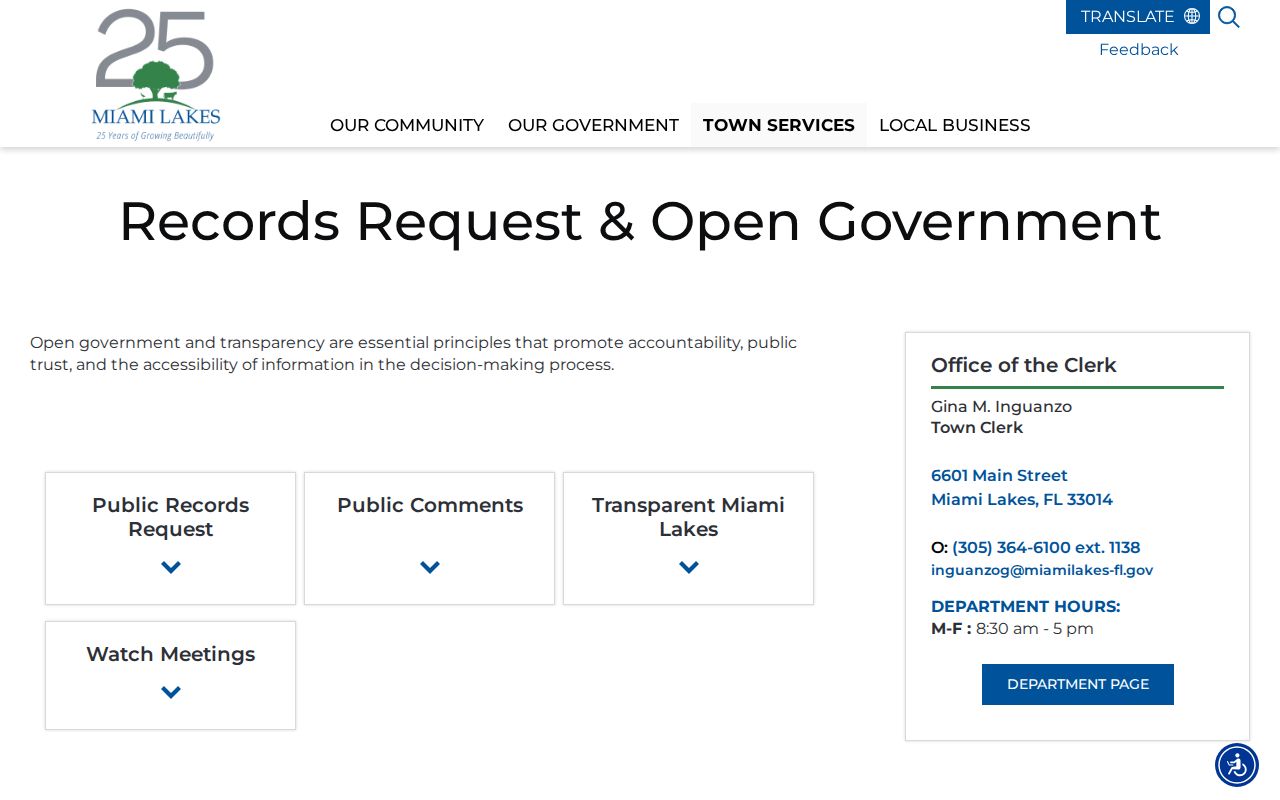
Use a department, address, folio, record type, and date range to keep the request precise. Florida law does not require a special form or an explanation of a lawful purpose.
Miami Lakes Records Span Levels
Miami Lakes incorporated in 2000, while Dade County began in 1836 and took the Miami-Dade name in 1997. That sequence explains why a town search alone misses most deeds, court files, marriage records, and older material. The town has no separate municipal court. County and circuit matters use the Eleventh Judicial Circuit and Miami-Dade Clerk, while police records follow Miami-Dade Sheriff's channels because the town contracts for service.
The county records and case-search hub directs people to Official Records, Civil/Family/Probate, Criminal, marriage, traffic, and tax-deed systems. The image shows separate record families rather than one residents directory.
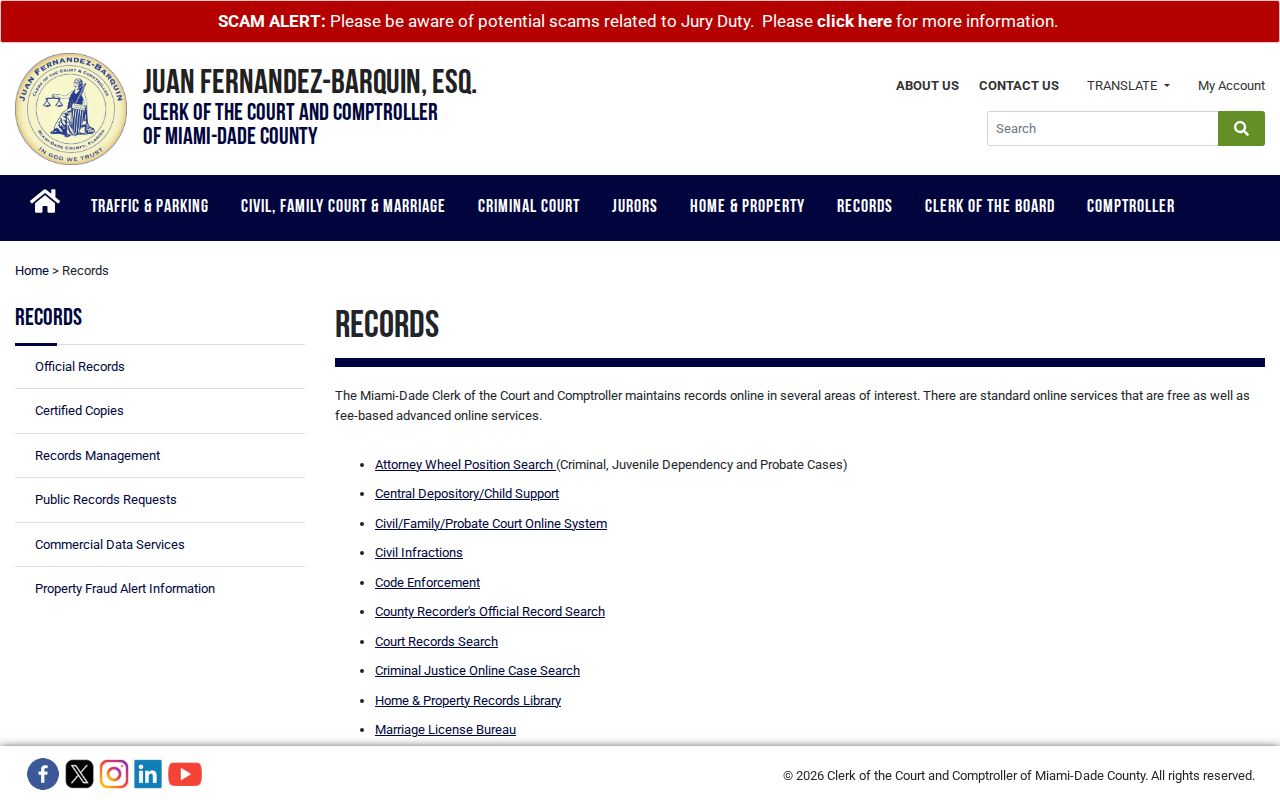
Pick the system that owns the record. A broad request to the wrong office can delay access even when the record is public.
- Roll
- A dated government list, such as the annual property assessment roll.
- Index
- A finding tool pointing to a filing or image, not always the certified record.
- Folio
- The parcel identifier connecting tax, map, deed, and permit evidence.
- Situs address
- The physical property address, which may differ from the owner's mailing address.
Miami Lakes Parcel Search Fields
The Miami-Dade Property Appraiser offers the quickest official address-to-owner route. Search modes include Address, Owner Name, Subdivision Name, and Folio. Address mode also accommodates a suite. Results may show owner, situs and mailing addresses, folio, legal description, values, land and building facts, exemptions, sales, and an aerial or parcel map. The roll is edited over time and exists for property assessment, not as a title opinion or household roster.
| Search choice | Starting value | Useful result | Limit |
|---|---|---|---|
| Address | Street number and name | Situs, folio, parcel card | Unit format can matter |
| Owner Name | Surname and given name | Named ownership interests | Trusts and entities may appear |
| Subdivision Name | Plat or subdivision | Parcels in the development | Not a resident list |
| Folio | Exact parcel number | Direct parcel match | Check displayed tax year |
A mailing address elsewhere may belong to an owner, trust, or manager. A homestead flag supports owner occupancy for one assessment date, but does not identify every person at the home. The full by-address method belongs in the Miami Lakes street directory.
Miami Lakes Deeds After 1974
The Clerk's Official Records index supplies the next link. It covers deeds, mortgages, liens, plats, judgments, domicile declarations, releases, satisfactions, powers of attorney, and other recorded instruments. Most web-accessible records begin in 1974. Search by party name in last-name-first-name order, Clerk File Number, Official Records book and page, or legal description. Save the entire index line, including party role, instrument type, recording date, and image reference.
Older documents are not presumed missing. The Records Library at 20 NW 1st Avenue preserves all years, provides public computers, accepts in-person and mail requests, and offers staff name searches for $2 per name per year. Ordinary copies are $1 per page, with $2 added for certification. Pre-1974 images continue to be placed online, but web coverage remains incomplete.
Insider tip. When names or postal labels change, carry the legal description and folio into older grantor-grantee indexes.
Miami Lakes Permits Add People
Town eTRAKiT adds a local layer that the county deed book cannot supply. Its public search accepts Permit Number, Property Address, Folio Search, Permit Type, or Contractor Name. A result can connect a site to an owner, applicant, contractor, project, plan-review status, inspection, or code matter. The portal page does not establish an earliest year, so a missing older permit should move to a records request rather than become a claim that no permit exists.
The Building Department answers at 305-827-4015 and buildingdepartment@miamilakes-fl.gov, with counter hours from 8 a.m. to 4 p.m. weekdays. Code Compliance uses 305-512-7130 and codecompliance@miamilakes-fl.gov. Clerk records may be requested at the counter from 8:30 a.m. to 5 p.m. A written request should identify the address, folio, permit or code number if known, document types, and dates. Ask for electronic copies and an advance estimate.
Current Miami Lakes Resident Directories
Current official sources list different slices of public activity. Their fields should stay separate. Ownership, voter registration, a court role, and a business address each arise from a different event and date.
| Official source | Names tied to | Keeper | Access route |
|---|---|---|---|
| Property roll | Owner and mailing contact | Property Appraiser | Free web search and map |
| Official Records | Parties to instruments | County Recorder | Web, library, mail, counter |
| Voter information | A known registrant | Miami-Dade Elections | Lookup or redacted request |
| Court index | Parties in public cases | Miami-Dade Clerk | Case systems and counter |
| eTRAKiT | Permit and code participants | Town departments | Search or records request |
The Miami-Dade transparency hub collects routes to property, court, official-record, medical-examiner, inmate, offender, and open-data sources.
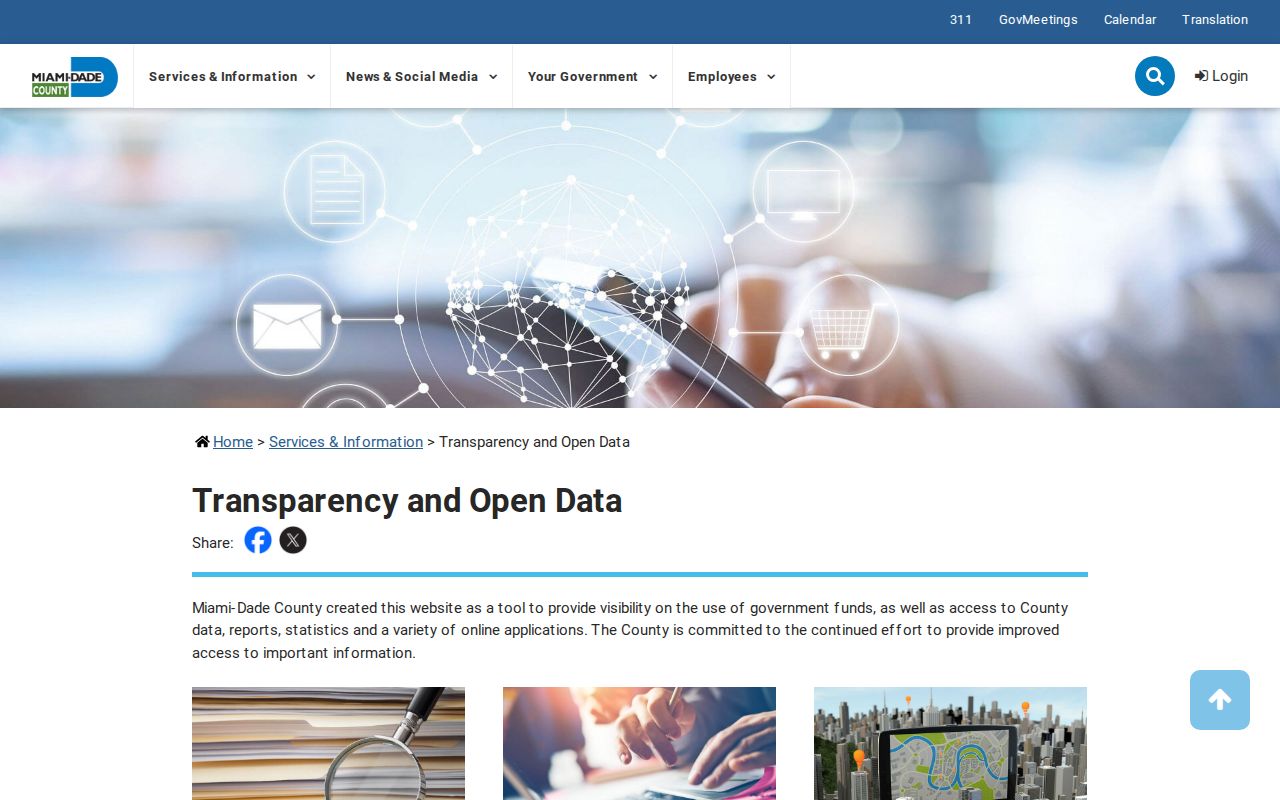
The hub helps locate the keeper, but every linked database has its own rules and update date. For one name, use the Miami Lakes resident lookup.
Miami Lakes Voter Record Limits
Miami-Dade Elections keeps county registration data. The town clerk supervises municipal elections but not the countywide voter database. The individual voter-information tool verifies a known registrant and election details; it is not a browseable neighborhood roll. A data request should name the nonexempt fields, an as-of date, format, and geographic filter.
Florida Statute section 97.0585 protects registration source location, Social Security and driver-license or Florida ID numbers, specified preregistrant data, and signature copying. Status is dated civic information, not proof that a voter slept at an address yesterday. Ballot choices are never part of participation history.
Miami Lakes Court Name Checks
Miami-Dade divides court access into Civil/Family/Probate and Criminal Online Case Search systems. Search fields can include a party or business name, case number, filing range, case type, division, and status. Public results may show case number, style, filing date, party roles, judge, docket events, disposition, and an image icon when access rules permit. Anonymous and registered users can see different images under Florida court security standards.
A web miss is narrow. Sealed, expunged, juvenile, adoption, and protected family material may not appear. Older or restricted public files may require the Clerk counter. Give names, an approximate year, case type, and any old number. When identity or outcome matters, request a certified disposition instead of treating the online docket as a final document.
Florida Opens Miami Lakes Records
Florida's access framework comes from article I, section 24 of the state constitution and chapter 119 of the statutes. Any person may request nonexempt records. A custodian should respond in good faith within a reasonable time, but the law does not set one numbered deadline for every request. Ordinary copy charges and a reasonable special-service charge may apply when retrieval requires extensive staff or technology resources.
The official Florida Public Records Law text gives the controlling access and exemption framework.
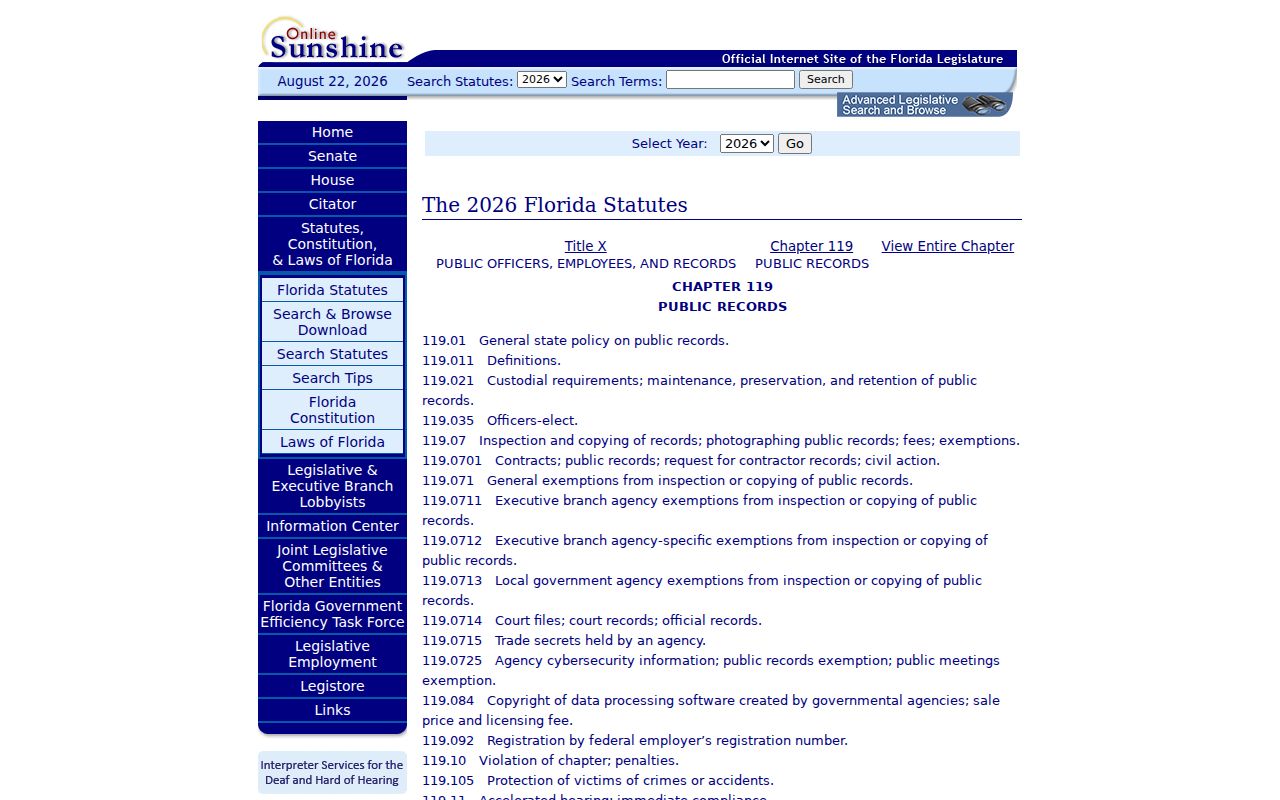
A broad presumption of access does not override specific limits on vital files, protected voter fields, motor-vehicle data, sealed cases, or qualifying confidential addresses.
Lawful use. Public access never permits stalking, threats, impersonation, harassment, or attempts to defeat a protected-address program.
Miami Lakes Vital Record Paths
Florida's certificate system differs from a public name index. Birth records remain confidential until more than 125 years old unless an authorized person applies. Death certificates without cause have broader access, while cause-of-death information remains restricted for 50 years. The Miami-Dade Clerk handles marriage licenses and divorce court files; the Florida Department of Health issues statewide certificate products. A dissolution report is not the full court case.
The Florida certificate page supplies current applications and order routes.
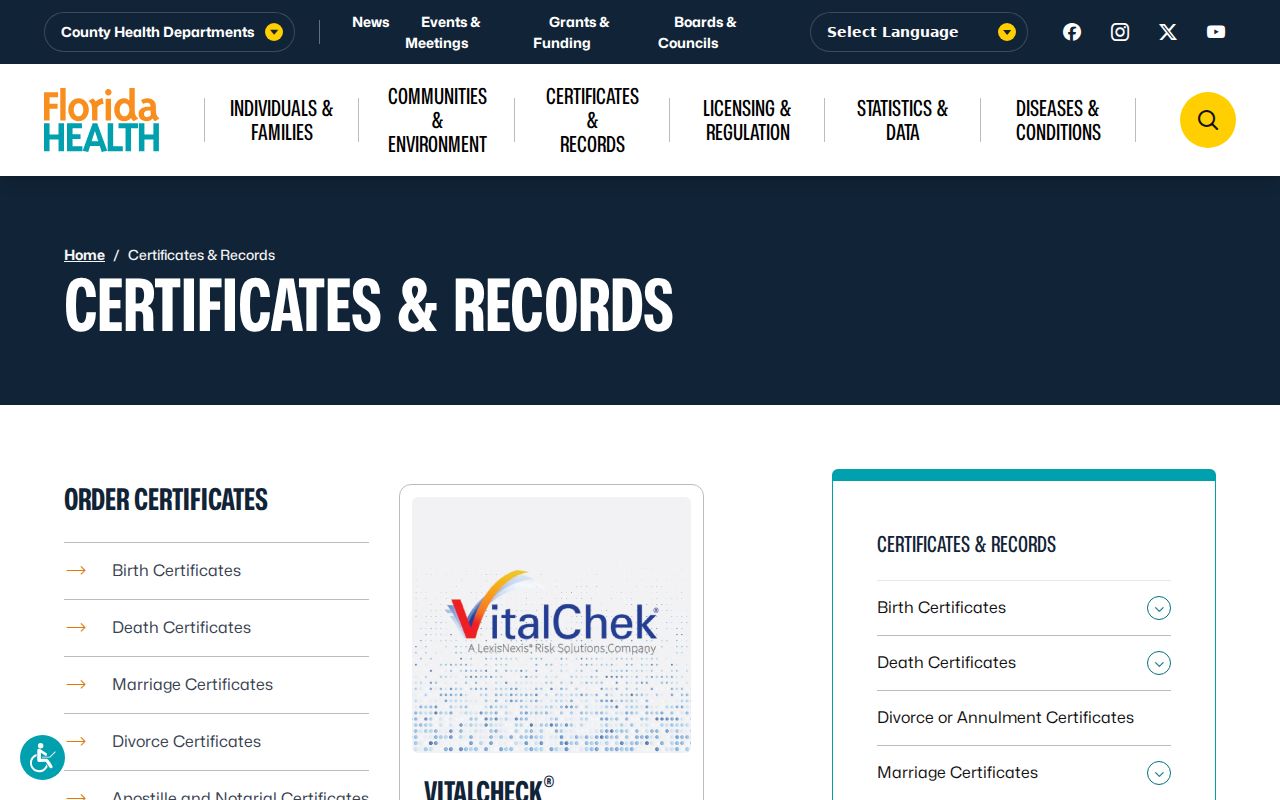
Use the current form because fees and payment methods can change. Applicants may need names, event date and place, relationship, identification, signature, delivery details, and proof of eligibility.
Historical Miami Lakes Resident Directories
The Miami-Dade Public Library System's Main Library Genealogy Collection is the main historical shelf. Its official description counts more than 27,000 bound books and 35,000 microforms. Holdings include city directories and telephone indexes, surname and family files, Florida state censuses for 1885, 1935, and 1945, passenger lists, military sources, and the Miami-Dade Obituary Index. A genealogy reference librarian can check a person, address, approximate year, and likely metropolitan edition.
Miami Lakes was developed mainly after 1960, so no nineteenth-century directory heading should be expected under that name. Search Greater Miami, Hialeah, Dade County, subdivision names, telephone books, Polk titles, and reverse editions. The public collection page does not list a complete Miami run, so exact years and publishers need catalog, title-page, or librarian verification. The Miami Lakes city directory collections workflow explains how to read entries without overstating an absence.
Miami Lakes Names Need Context
Miami-Dade's multilingual name patterns make careful matching essential. Try both orders of compound surnames, initials, hyphens, married names, and forms without accents when a legacy index does not handle them. A spelling pattern never proves identity or ethnicity. Record the exact search, date, role, and result before deciding two records belong together.
Official rolls and commercial people-finding compilations serve different purposes. A government source identifies its custodian, field meaning, date, and correction channel. A commercial compilation may merge people, lag behind a move, or repeat an error. Treat it only as an unverified lead. Correct parcel issues with the Property Appraiser, index problems with the Clerk, registration data with Elections, and town records with the department that owns them.
| Official record | Known keeper, stated role, dated evidence, direct correction route |
|---|---|
| Commercial compilation | Secondary aggregation, uncertain refresh cycle, possible merged identities |
| Best practice | Confirm with two independent official facts and preserve dates |
Miami Lakes Fraud Record Checks
Recorded documents can protect a current owner. Miami-Dade promotes Property Fraud Alert and publishes channels for suspected mortgage or deed fraud. A high-priced private deed-copy solicitation should be compared with the Recorder's $1-per-page copy charge and $2 certification charge. Certification proves that a copy matches the recorded file; it does not settle ownership or validate every statement in the instrument.
Florida's official unclaimed-property search and claim process is free, and a claimant may need identity and old-address evidence. Jury-duty payment demands should be checked with the Clerk at an independently obtained number. These sources can reconnect a name with a dated address or filing, but the record role and status must remain clear.
Note: Most Official Records after 1974 are online, while earlier indexes still require Records Library research during ongoing digitization.